Our final full day in Japan we spent mostly getting to and in the Tokyo Tower, an Eiffel Tower-esque building near the river.
On the way we came across the Zojo-ji Temple, one of the primary Buddhist temples in Japan, which sits in the shadow of the tower.
After walking around the large temple complex, we finally arrived at the Tokyo Tower.
From the top of the tower, you could see all of Tokyo.
Kate really liked the buildings in the background that look like tornadoes.
After spending a lot of time at the top of Tokyo Tower, we wandered around Tokyo for a while and finally ended up drinking some cava on the riverside.
Friday, June 17, 2011
Wednesday, June 15, 2011
Japan Day Four & Five: Kyoto
The next two days we spent in Kyoto visiting even more shrines and temples. Some we spent our time getting to, but most we just stumbled upon as we walked around the city. Kyoto is a city full of special hidden places, many of which are barely mentioned on the maps.
Our first site was the Heian Jingu Shrine, another UNESCO World Heritage site, known for its gardens and ornate architecture.
Inside the courtyard of the temple, we were approached by a couple of Japanese high school students who asked us to answer a couple of questions. It turns out that most Japanese students learn some English in school and are given assignments to find English speaking people outside of class and talk with them. We were happy to stop and answer their questions about our favorite desserts and places to go in Japan.
When we left the temple, we were approached by another small group of Japanese high school students who wanted to ask us questions. We stopped again and talked with them for a while. At the end of our “interview” they took a picture with us and gave us origami swans as a gift. Chris handed them a business card from Columbia in return… it’s all we had to return the gift, and the students seemed to really enjoy it.
We left there to go find the Ginkakuji Temple, better known as the Silver Pavilion, but on our way, we came across the Okazaki Jinja Shrine which is believed to be one of four shrines built along the four compass points in Heiankyo (the ancient name for the capital Kyoto) to protect the Imperial Court in 794 when national capital was transferred here. This shrine received a ritual offering for the childbirth of The Empress in 1178 and is believed to hold the god and goddess of easy childbirth. In addition, because this shrine was founded in answer to an invocation by the emperor to protect the Imperial Court and expel evil related to the compass points, it is also believed to house the god and goddess of dispelling evil related to the compass points and other sources.
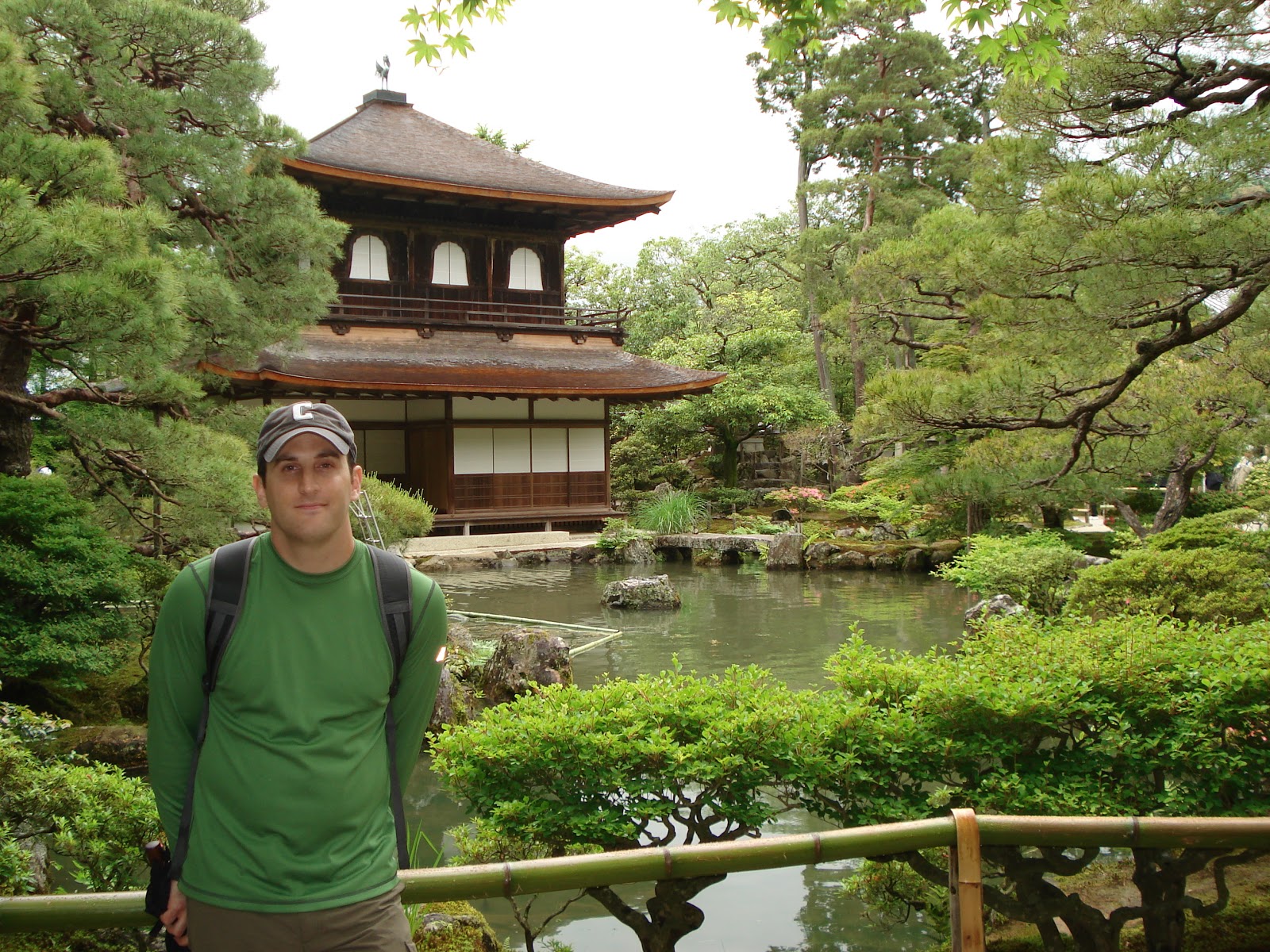
Finally, we made it to the Silver Pavilion, a Zen temple at the foot of Kyoto's eastern mountains. In 1482, shogun Ashikaga Yoshimasa built his retirement villa on the grounds of today's temple, modeling it after the Golden Pavilion (see prior post), his grandfather's retirement villa at the base of Kyoto's northern mountains. The villa was converted into a Zen temple after Yoshimasa's death in 1490.
Today, the area consists of the Silver Pavilion, half a dozen other temple buildings, a beautiful moss garden and a unique dry sand garden.
On the way home from here, we came across the Honen-in Temple, a small and peaceful temple on the side of the mountain.
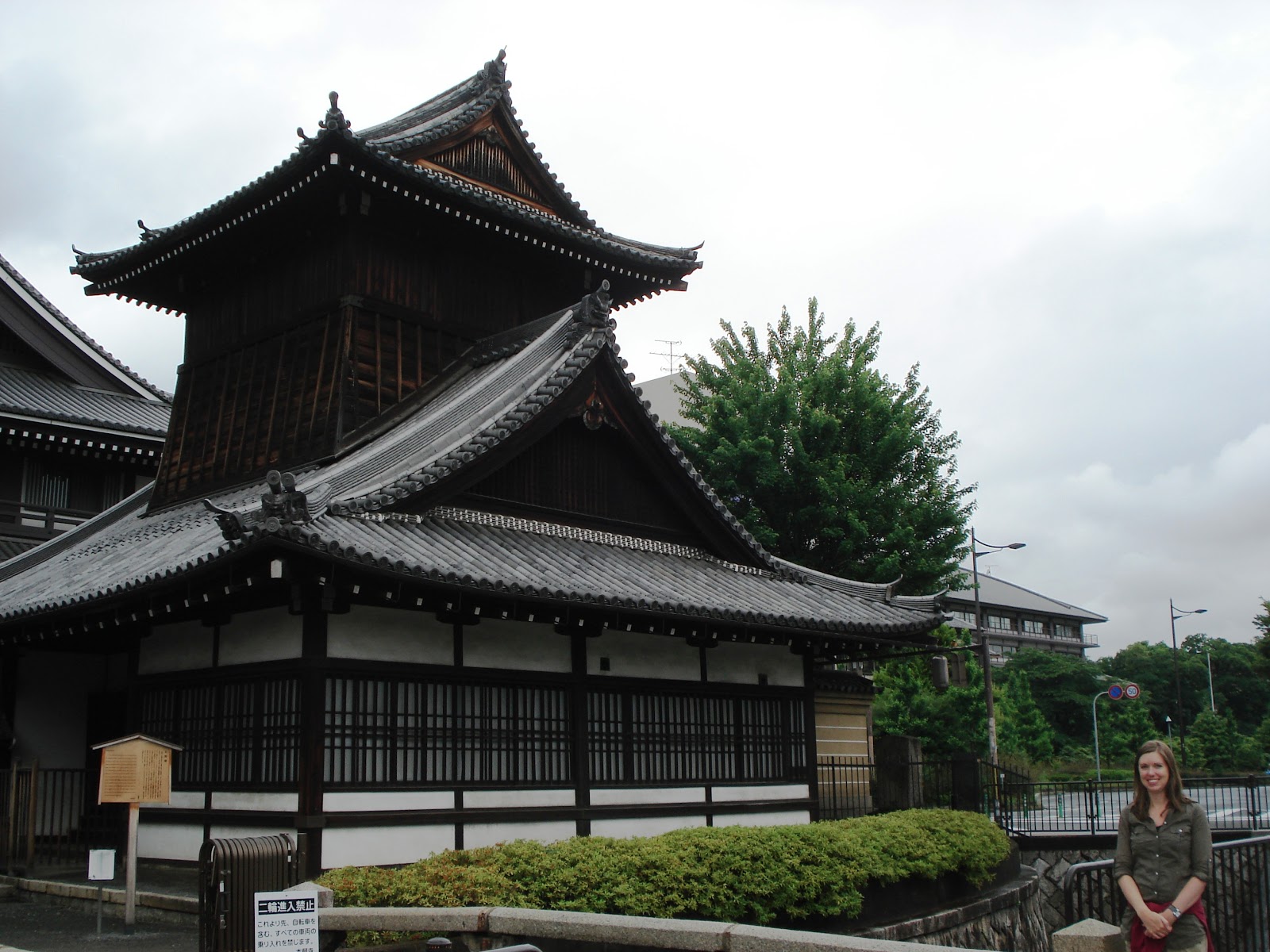
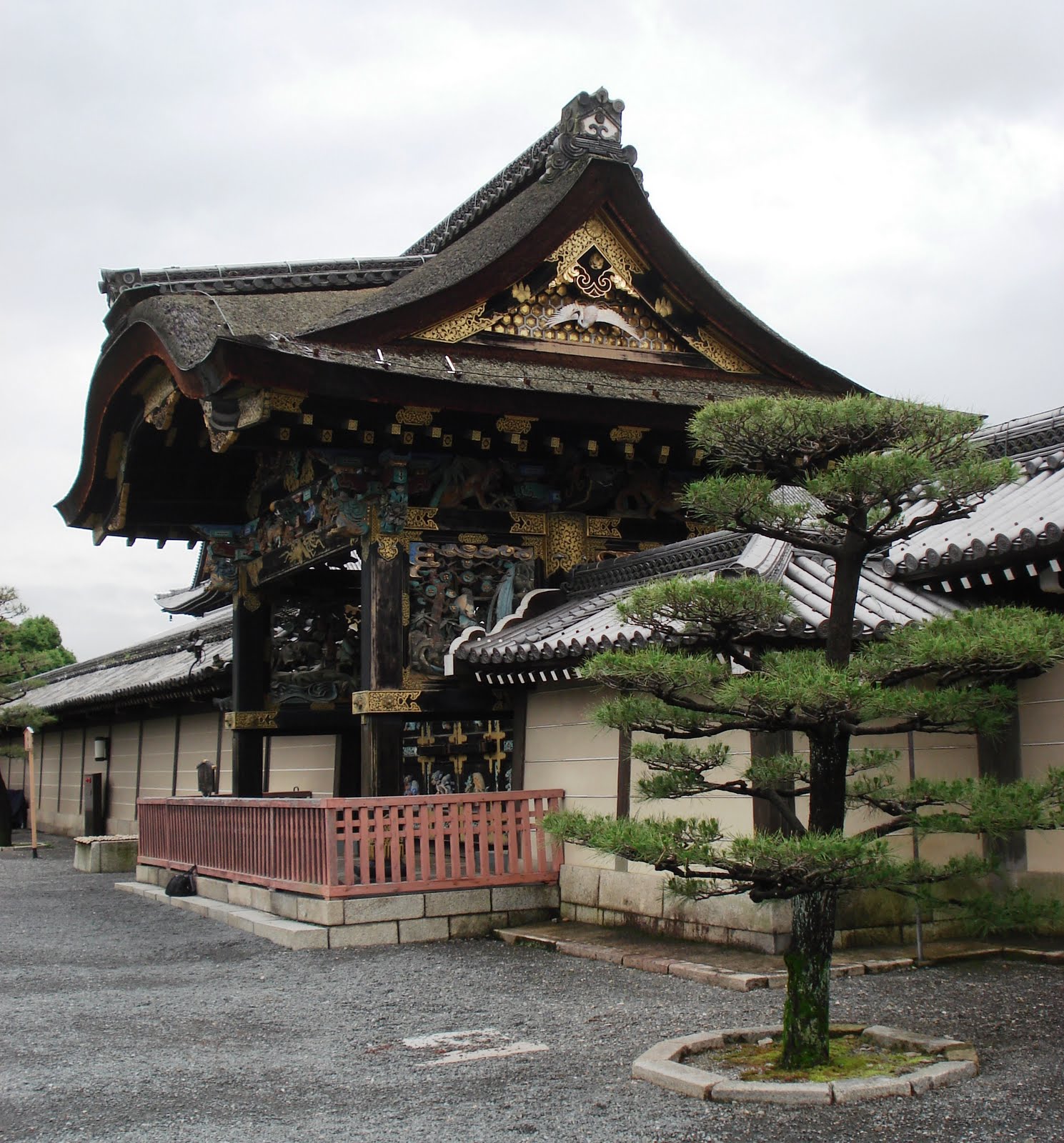
The next day we took a trip to the Nishi Hongwanji temple, another UNESCO World Heritage site and an active Buddhist temple.
The Nishi Honganji and Higashi Honganji are two large temples in the center of Kyoto. The temple, built in 1591, is the head temple of the Honganji faction of the Jodo-Shin sect with over 10,000 subtemples across the country and 200 temples overseas.
Higashi Honganji was built only eleven years after and a few street blocks east of Nishi Honganji as the head temple of the Otani faction of Jodo-shin Buddhism. Its main hall, the Goeido is Kyoto's largest wooden structure and dedicated to Shinran, the sect's founder.
After seeing these two sites, we headed out for some sushi and then on the train back to Tokyo!
Sunday, June 12, 2011
Internet Hiatus
Please excuse our hiatus from our blog the past 10 days or so. China has blogspot (and facebook) blocked along with many other websites. We are now in Cambodia, getting ready to go out into the jungle for the day! We will have to do a blog dump soon to update you all on our last two days in Japan and our 10 days in China.
Thursday, June 2, 2011
Japan Day Four: Nara
We took a side trip to a small town 45 minutes outside of Kyoto called Nara. Nara was the capital of Japan briefly from 710 AD – 784 AD when the capital was moved to Kyoto. It is widely considered the cradle of Japanese culture and arts.
There is a legend that a god arrived in Nara on a white deer to guard the newly built capital. Since then the deer have been regarded as heavenly animals, protecting the city and the country. Because of this, deer are considered sacred and are allowed to roam the park freely. Now, the deer are less concerned with transporting the gods and are more interested in relaxing and eating biscuits from tourists.
Since we only had one day in Nara, we spent all our time at Nara Park which holds dozens of temples and shrines, several UNESCO World Heritage Sites and the tranquil deer for which Nara is known. Our first stop was at the five-story Pagoda and the Kofukuji Temple. Both structures were built in 710 AD, the same year Nara was established as the capital of Japan. The temple was by Emperor Shomu, while his wife, Empress Komyo was responsible for the pagoda. This pairing has caused the buildings to represent the ideal of marital harmony. Unfortunately, we couldn’t go in the pagoda and no pictures were allowed in the temple, but the Buddhist statues were spectacular.
It is custom in Buddhism to ring the bell and bow before entering the temple. “When in Rome…”
There is a legend that a god arrived in Nara on a white deer to guard the newly built capital. Since then the deer have been regarded as heavenly animals, protecting the city and the country. Because of this, deer are considered sacred and are allowed to roam the park freely. Now, the deer are less concerned with transporting the gods and are more interested in relaxing and eating biscuits from tourists.
You have to be careful though, because once the deer realize you have biscuits, they come after you!
Later, Chris and the deer got a little “too close”…
And this caused trouble (sorry for the vertical shot at the beginning, I always forget not to do that.)
We next walked towards the Todaiji Temple that was built in 752 AD by Emperor Shomu to house the Great Image of Buddha and is yet another UNESCO World Heritage Site. Though the original structure was destroyed by fire, and the current (completed in 1709) is only 2/3 the size of the original, it is still the largest wooden structure in the world.
First, you must pass through the massive “great south gate” or the Nandiamon Gate. It is a truly awe-inspiring structure when you consider its size.
You then enter the walled in gardens and approach the building. It’s truly enormous.
Once inside the temple there is are giant sculptures of deva kings (guardians of the Buddhist faith) and notable Buddhist figures, but the central figure is a colossal figure of Buddha.
Leaving the Todaiji Temple, we made our way to the Kasuga Taisha Shrine, another UNESCO World Heritage Site. Built in 768 AD, this shrine holds over 1,000 bronze lanterns and is surrounded by over 2,000 stone lanterns.
Finally, we made our way out of Nara Park.
We took the train back to Kyoto and then went out to enjoy some delicious Japanese sushi.
Subscribe to:
Posts (Atom)